
The welding quality of contact assemblies directly determines the performance of low-voltage electrical switch products. In the welding process of low-voltage electrical contact assemblies, the appropriate selection of metal electrode materials and their structural design are essential conditions for ensuring the stability of the resistance welding process and obtaining optimal welding quality. For contact assemblies made of special materials to be welded, corresponding welding processes must be designed based on the characteristics of their contact and support materials to guarantee welding quality and thus meet the requirements for good performance of the contact assemblies.
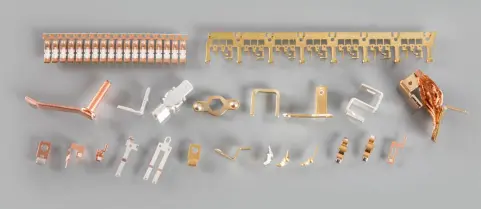
Contact assemblies are critical electrical contact components within low-voltage electrical devices, often referred to as the “heart” of switchgear products. The quality of contact assemblies significantly determines the performance of electrical products; indeed, failure of these assemblies typically signifies the end of service life for electrical components. Typically, contact assemblies are formed by joining contacts and support components made of different materials through specific welding processes. Resistance welding, induction brazing, flame brazing, and furnace brazing are the primary welding techniques used in manufacturing low-voltage electrical contact assemblies, with resistance welding being the most widely applied. Due to the demand for integrated components within domestic and international low-voltage electrical enterprises, many manufacturers—or their contracted welding suppliers—treat contact assembly welding as a critical production step. However, most lack familiarity with the properties of resistance welding electrode materials. This results in suboptimal choices for upper and lower electrode materials, electrode shape design, and welding process planning, leading to numerous welding quality issues during contact assembly production.
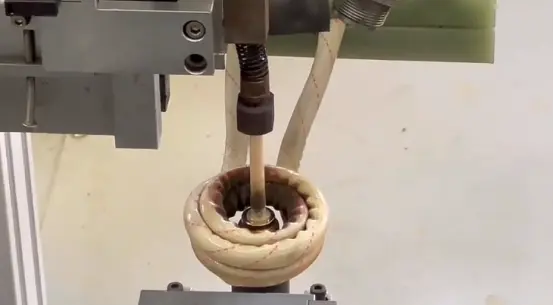
Typically, the contacts and supports of contact assemblies are made of different materials. In the most common resistance welding process, considering the weldability of both, it can be divided into resistance spot welding and resistance brazing.
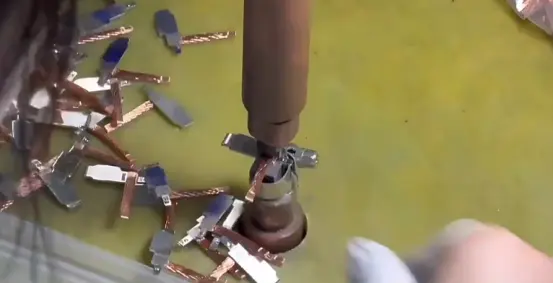
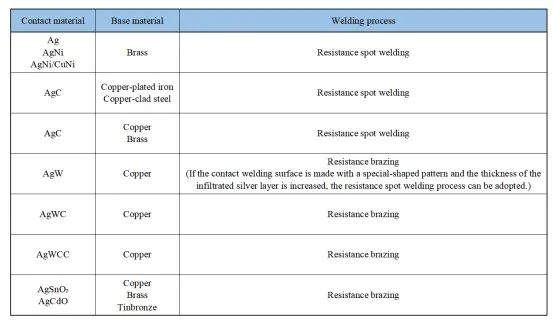
In low-voltage electrical contact assemblies, the contacts and supports are usually made of different materials. The choice between metal-electrode resistance spot welding and resistance brazing is determined by their weldability. The following lists some common welding process options for contacts and supports.
Post time: Apr-15-2026