
According to Chinese national standard (GB/T 156-2017) and industry practice, the most common dividing line is 35kV. Voltage above 35kV is considered high voltage, while 1-35kV is medium voltage. Although this differs from international standards, we will use the Chinese standard for now.
High-voltage environments place stringent requirements on conductivity, high-temperature resistance, weldability, and wear resistance; therefore, composite materials are almost always used.
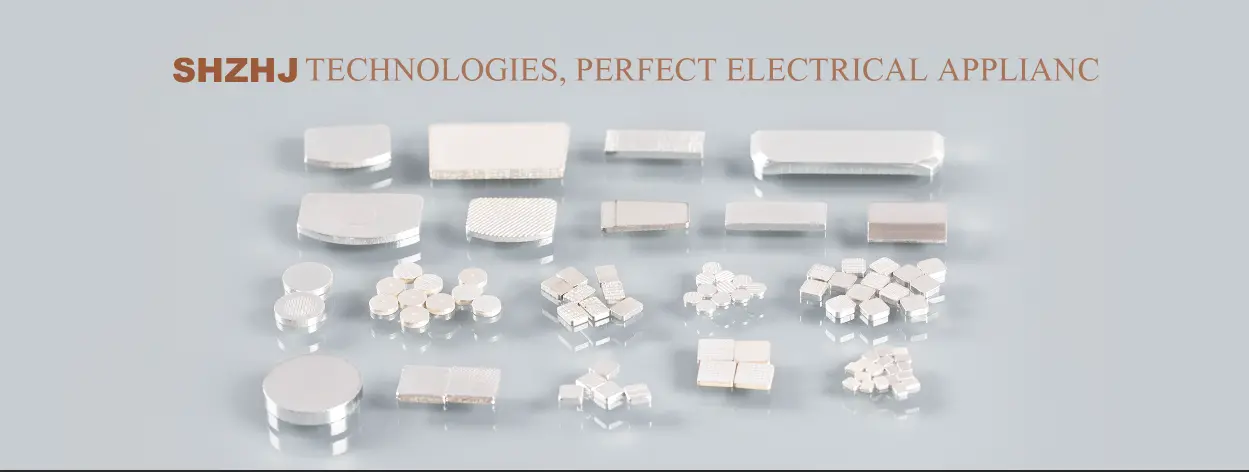
The most common are copper-tungsten and copper-chromium alloy materials.
Copper-tungsten (Cu-W) alloys are well-known arc-resistant materials: tungsten has a high melting point of 3422℃ and extremely strong resistance to arc erosion; copper provides excellent electrical and thermal conductivity. They are mainly used in arc contacts that withstand direct arc burning, and are the first to bear the brunt when circuit breakers interrupt large currents.
Copper-chromium (Cu-Cr) alloys, CuCr30, CuCr50, CuCr0.7, and QCr0.5, offer excellent overall performance: they have better resistance to welding and dielectric strength recovery (i.e., rapid insulation recovery after interruption), making them the most widely used contact material in high-voltage vacuum circuit breakers.
In addition to this, China has developed several new upgraded materials.
Graphene-copper-tungsten alloy: By adding graphene, it significantly improves:
* Arc erosion resistance: Over 20% improvement in ablation resistance, resulting in a substantial reduction in losses under high-temperature arc conditions.
* Electrical conductivity: Over 20% improvement in conductivity, enabling stable carrying of ultra-high voltage and high current.
* Mechanical properties: Over 8% improvement in hardness, effectively resisting thermal stress shock and significantly reducing the risk of cracking.
* Wear and corrosion resistance: Significantly improved microstructure density, effectively resisting corrosion from decomposition gases and extending service life.
Therefore, this material can significantly extend maintenance intervals, reduce power grid operation and maintenance costs, and provide key material support for the upgrading of ultra-high voltage power grids.
In special environments, such as outdoor disconnect switches, the contact surface is also coated with an alloy powder (Cr-Mo-Ni-Al-Cu system) for surface protection: addressing the heating and corrosion problems of contacts in outdoor disconnect switches and other devices susceptible to corrosion and wear.
To improve conductivity, the surface is also silver-plated. Customers can choose according to the specific needs of their products. High-voltage electrical contacts are commonly manufactured using powder metallurgy or melt infiltration methods. Poor manufacturing processes can easily lead to problems such as uneven density, delamination, clumping, or deformation. Therefore, it is essential to choose a reputable company with extensive experience. (info@shzhj.com)
Post time: Jun-02-2026