
As power systems demand higher safety and longer service life, electrical contact materials—core components in low- and high-voltage apparatus—are undergoing significant technological upgrades. Currently, silver-based, copper-based, and composite materials offer distinct advantages across various applications, drawing widespread industry attention.
Low-Voltage Apparatus: Silver-Based and Copper-Based Materials
In low-voltage devices, silver-based alloys remain predominant. Silver-tin oxide Ag-SnO₂ contact offers excellent conductivity, arc erosion resistance, and anti-welding properties, gradually replacing traditional silver-cadmium oxide Ag-CdO contact in relays and contactors. Silver-nickel Ag-Ni contact combines silver’s conductivity with nickel’s hardness, suitable for low-to-medium current contacts. Silver-carbon Ag-C material leverages carbon’s lubricating and anti-welding characteristics to significantly reduce contact wear under frequent operations.
Among copper-based materials, copper-silver Cu-Ag contact enhances conductivity and corrosion resistance while maintaining cost advantages, making it ideal for cost-sensitive applications. Copper-chromium Cu-Cr contact, with high hardness and arc erosion resistance, is commonly used in high-current, high-frequency circuit breakers.
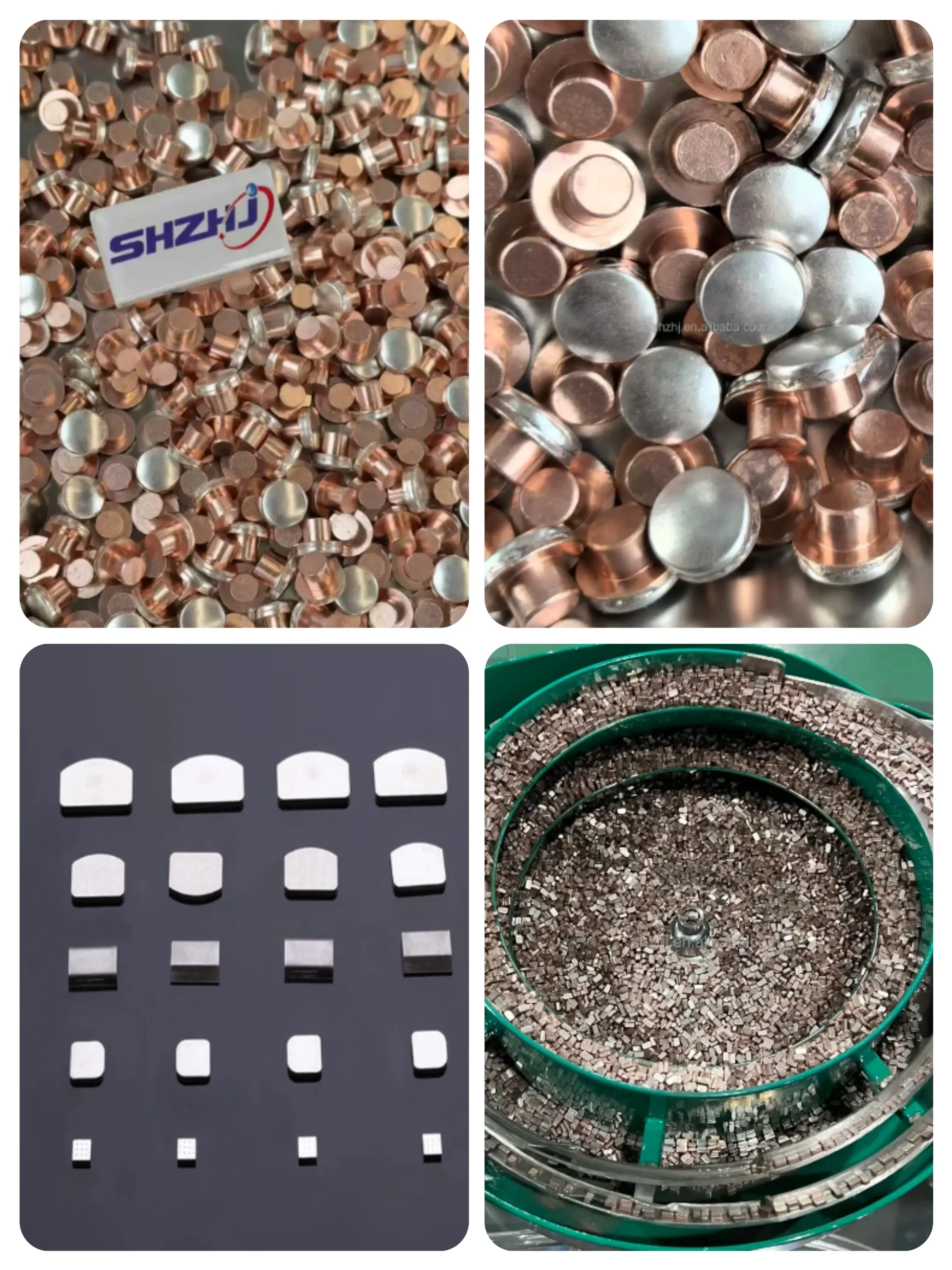
Additionally, laminated composites—formed by bonding multiple metals or metal-nonmetal layers—achieve a synergy of high conductivity, hardness, and anti-welding performance for high-performance low-voltage apparatus.
High-Voltage Apparatus: Arc-Resistant Materials Are Key
In high-voltage applications, copper-tungsten Cu-W contact alloys exhibit high melting points, hardness, and good conductivity, effectively withstanding arc erosion under high-voltage, high-current conditions. They are widely used in high-voltage circuit breakers and disconnect switches. Performance can be further optimized by adjusting tungsten content.
Copper-chromium Cu-Cr alloys contact perform exceptionally well in high-voltage vacuum interrupters and SF₆ circuit breakers. The addition of chromium enhances hardness and corrosion resistance, extending contact life. Silver-tungsten Ag-W contact alloys combine silver’s conductivity with tungsten’s high-temperature and arc resistance, meeting the extreme demands of high-voltage DC circuit breakers.
In summary, the scientific selection of electrical contact materials provides a solid foundation for the safe and efficient operation of modern power equipment.
Post time: Jun-08-2026