
In relays, contactors, and switches, contacts are small but critical—they determine electrical life and system reliability. A clear sourcing guide helps balance selection, cost control, and risk prevention.
I. Define the Load, Then Select the Material
Contact material selection starts with understanding the load type:
- Resistive Loads (heaters, incandescent lamps): Steady current, but inrush can be 10–20x rated. Select contacts based on inrush, not steady current.
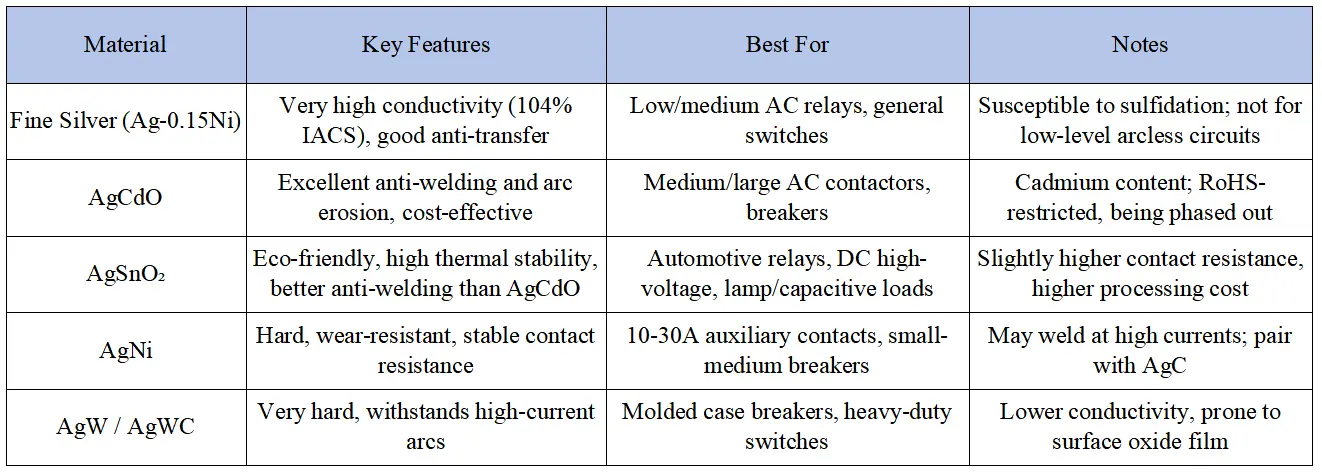
- Inductive Loads (motors, solenoids): High back-EMF during disconnect; arcs are the main threat. Choose AgCdO or eco-friendly AgSnO₂, which absorb heat during arc decomposition.
Capacitive Loads (switch-mode power supplies, capacitor banks): Very high inrush during turn-on, risking welding. Prefer AgSnO₂ or AgZnO for better anti-welding.
- Signal-Level Loads (sensors, PLC inputs): Very low current (mA), no self-cleaning arc. Contact resistance stability is the only standard. Use gold-plated or palladium alloy contacts to prevent oxidation.
II. Comparison of Main Silver-Based Contact Materials
III. Contact Form and Process Selection
Contact form affects assembly and long-term reliability:
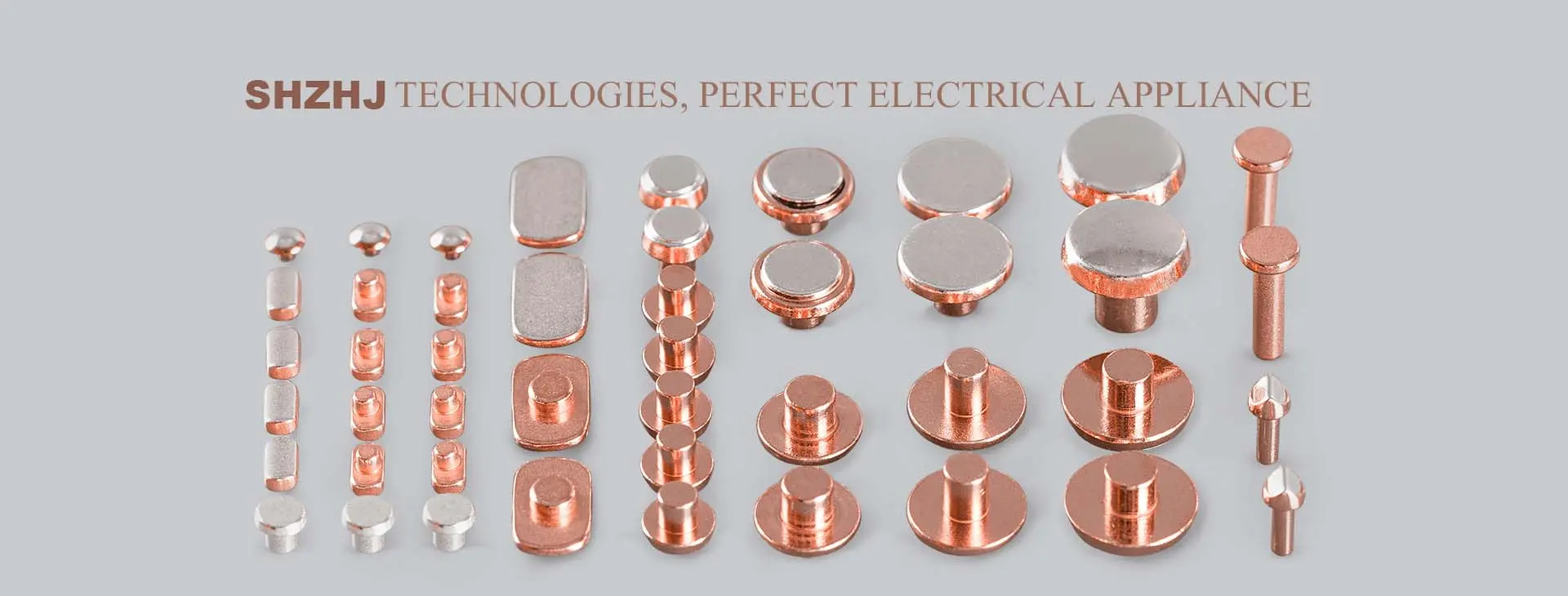
Rivet-type contacts: Suitable for automated riveting, cost-controllable. Options include solid rivets (single material) and bi-metal/tri-metal rivets (working layer + copper base), which reduce precious metal use—ideal for high-volume medium/low-current relays.
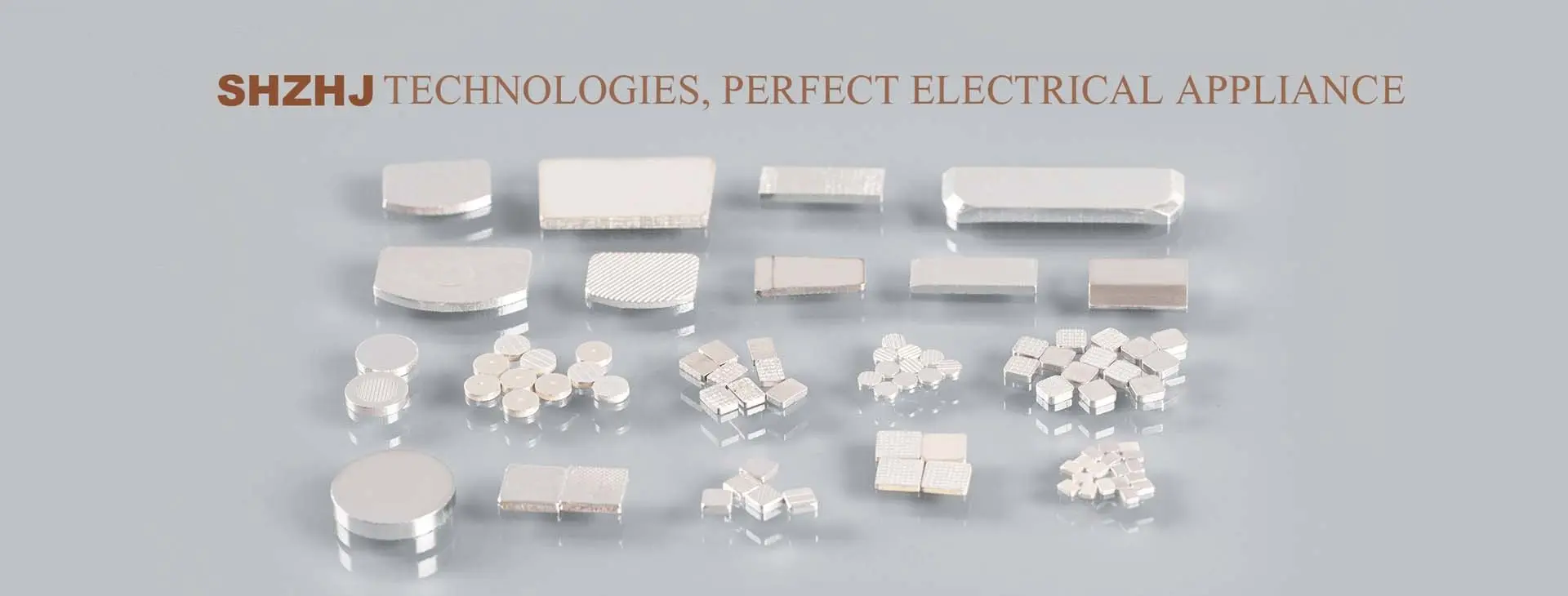
Contact tips/ custom shapes: For complex geometries or high-precision welding, require resistance brazing or soldering.
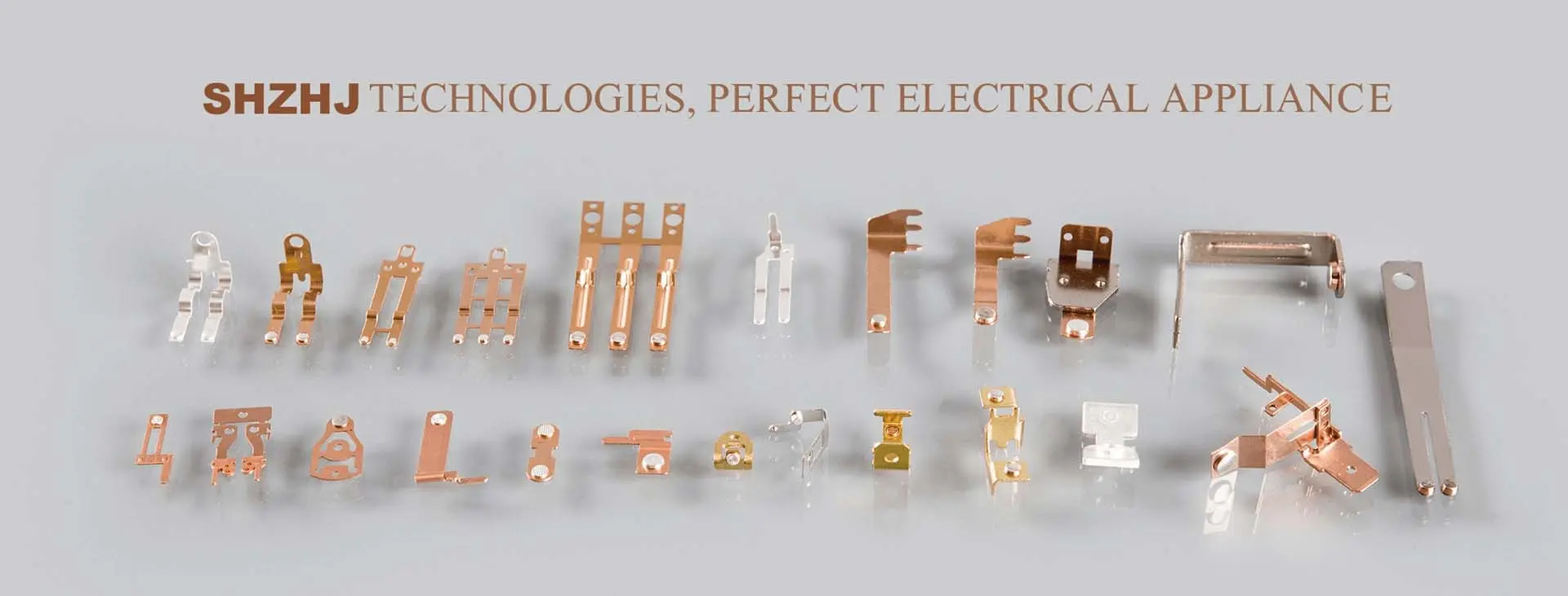
Pre-assembled components: Pre-welded contact + carrier assemblies simplify customer assembly and reduce process variation.
Sourcing advice: For high-volume standard relays, prefer composite rivets to balance performance and cost. For extreme reliability or special shapes, consider custom welding solutions.
Post time: Jun-25-2026